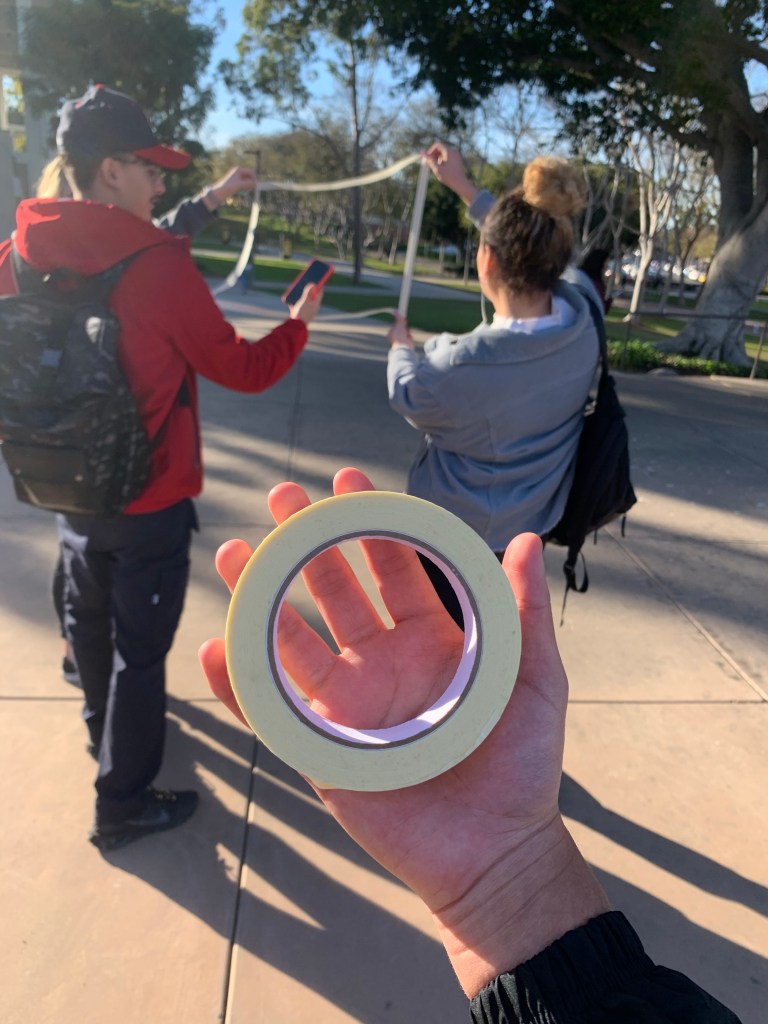
#1 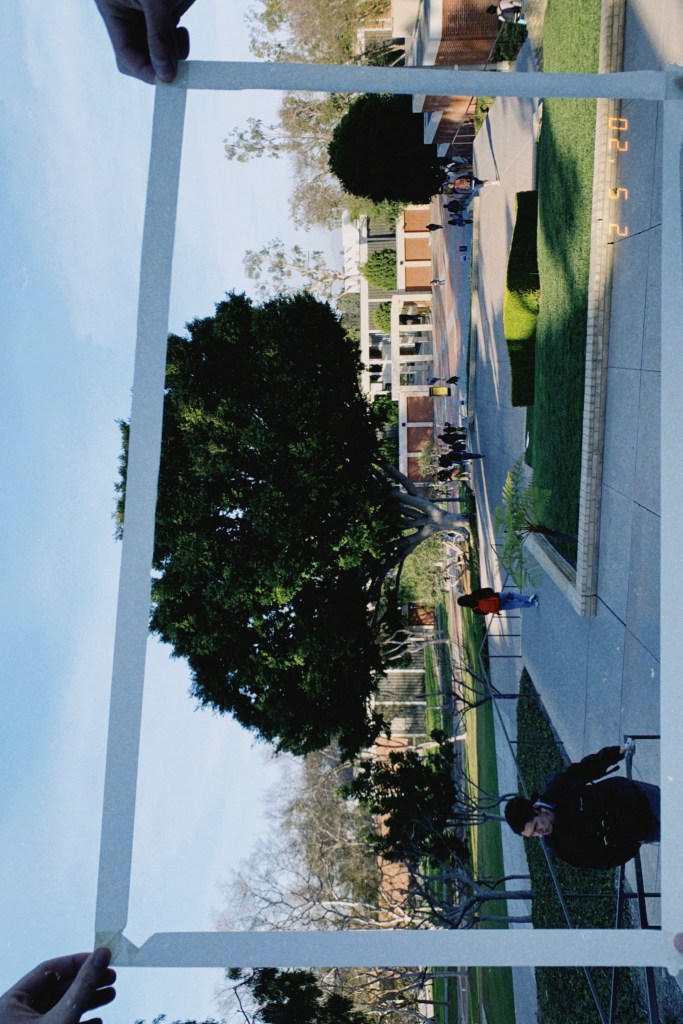
#2 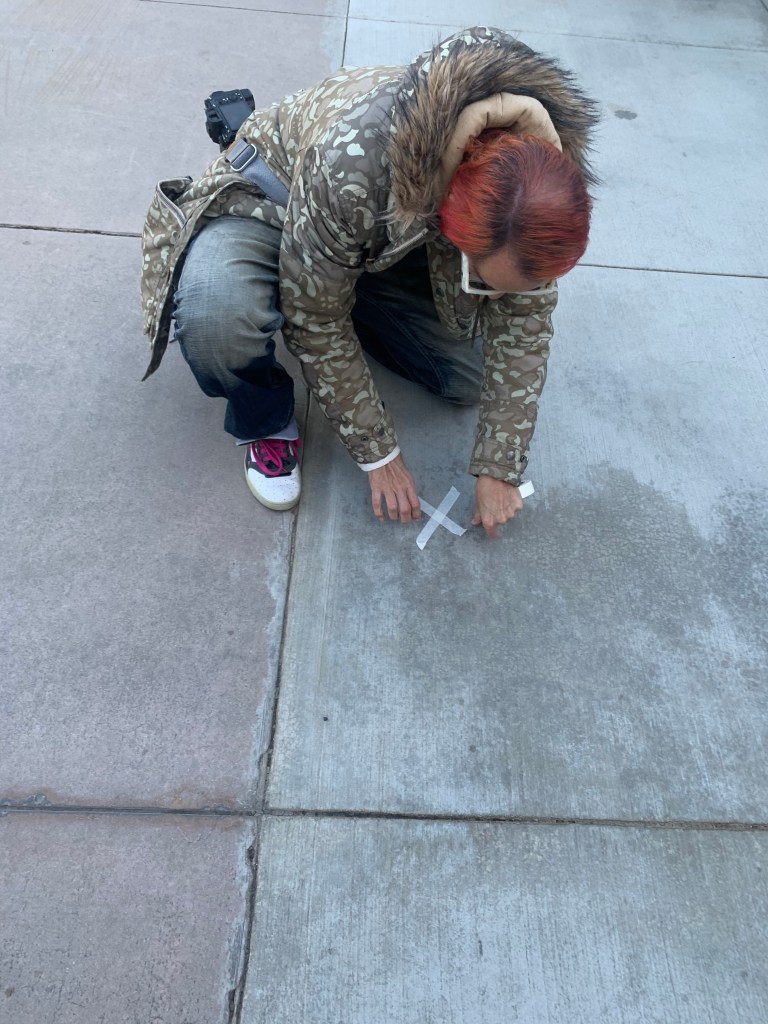
#3
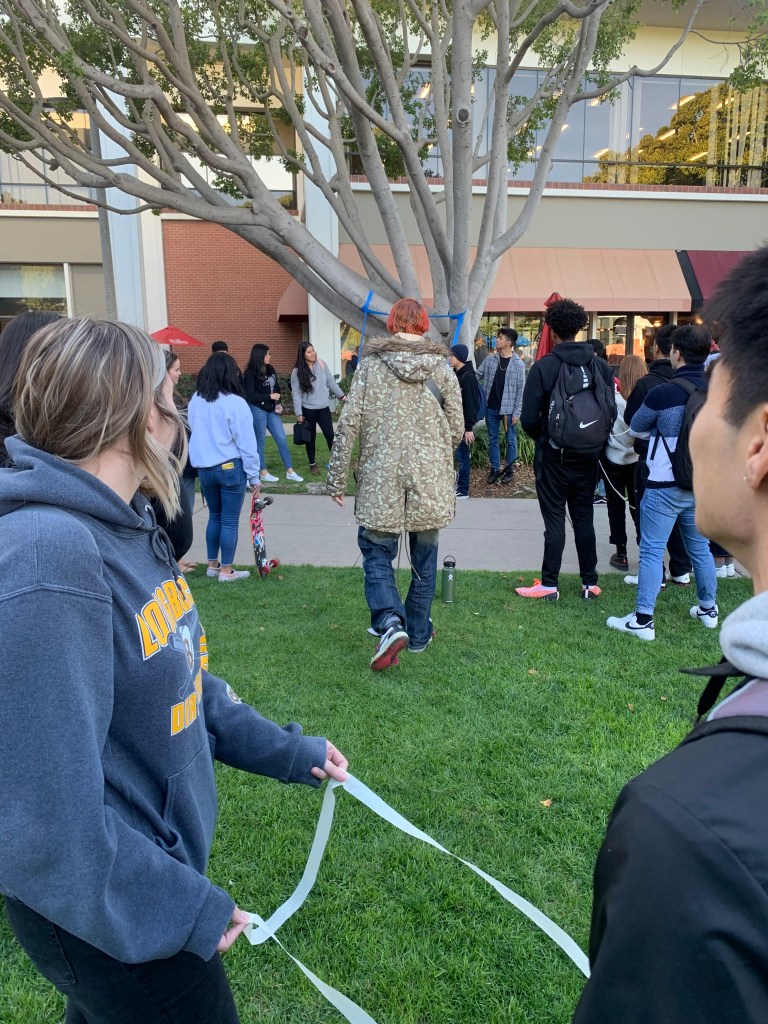
#2 – Our actual “art” within our frame
#3 – Prof. Zucman marking an “X” so classmates can step to observe the scenery in a good spot during our art explanation
2. Discuss the Form, Aesthetics & Content of your art.
Formal Qualities: For my group art activity, we chose to do scenery rather than a specific object. The scenery featured a very large tree with nice dark green leaves that covered it’s branches.
Aesthetics: The scenery we captured with our frame can be describes as soothing to look at. It invites the viewer to stop for a second and take in the nature that is being presented to them.
Content: To me, the frame captured more than just a tree. It tells the viewers to not just focus on the ground but rather to search everywhere. Oftentimes, people will only try to find art in places that are beneath or at their eye level, but usually never stop to look around and realize there could be something extremely beautiful infant of them that they would noticed had they ben looking up and around rather than just at the floor. It means that nature is beautiful as well and unforutnraley also goes unnoitced plenty of times. My peers admitted to just walking past this scenery without giving it a second thought, but when pointed out, they realized how nice looking the view is there. This is important because it reminds us to not limit art and beauty to just things that are within touch, but be open to things around us.
3. To me, my “art” was art before putting my frame around it. I believe this because the scenery we captured is beautiful and if you actually stopped to admire the nature around us and in that specific frame, you would also agree with its beauty.
4. I believe my “art” will continue to remain art even after the frame is around it because it is out in the open. The scenery is not hiding behind a wall or hard to spot, so long as your paying attention to your surrounding, you will be able to notice this beautiful view.
5. I believe knowing whether an object is art or not is something that varies with each person. I think its something more personal and individually decided because what I consider art may not be considered art by a peer of mine. I think as long as an object/scene has a message, I would consider it art.
6. I do believe art can be something other than an object. I believe the art my group captured with our frame helped me to answer this question. Most of my peers were focused on searching on floor-level objects or on things on walls, however, we did something different and chose to focus on a view rather than a tangible object.
7. Yes, art does reside in the experience of the viewer. People can either choose to walk past art without giving it a second thought and they’ll never get to experience that piece, however, if a person choose to interact with the art, they’ll be able to obtain their now personal message from the piece and leave thinking of their perception of the piece. The art is enjoyed through the experience of the viewer.
 Edwin Hernandez